

Surfaces of Inquiry
Painting is the foundation of my practice and a way of thinking through the body's relationship to the world. Through gesture, colour, and material, I explore the body as a shifting landscape—at once intimate, vulnerable, and entangled with the more-than-human world. These paintings move between abstraction and figuration, investigating how bodies inhabit, transform, and are transformed by their environments.
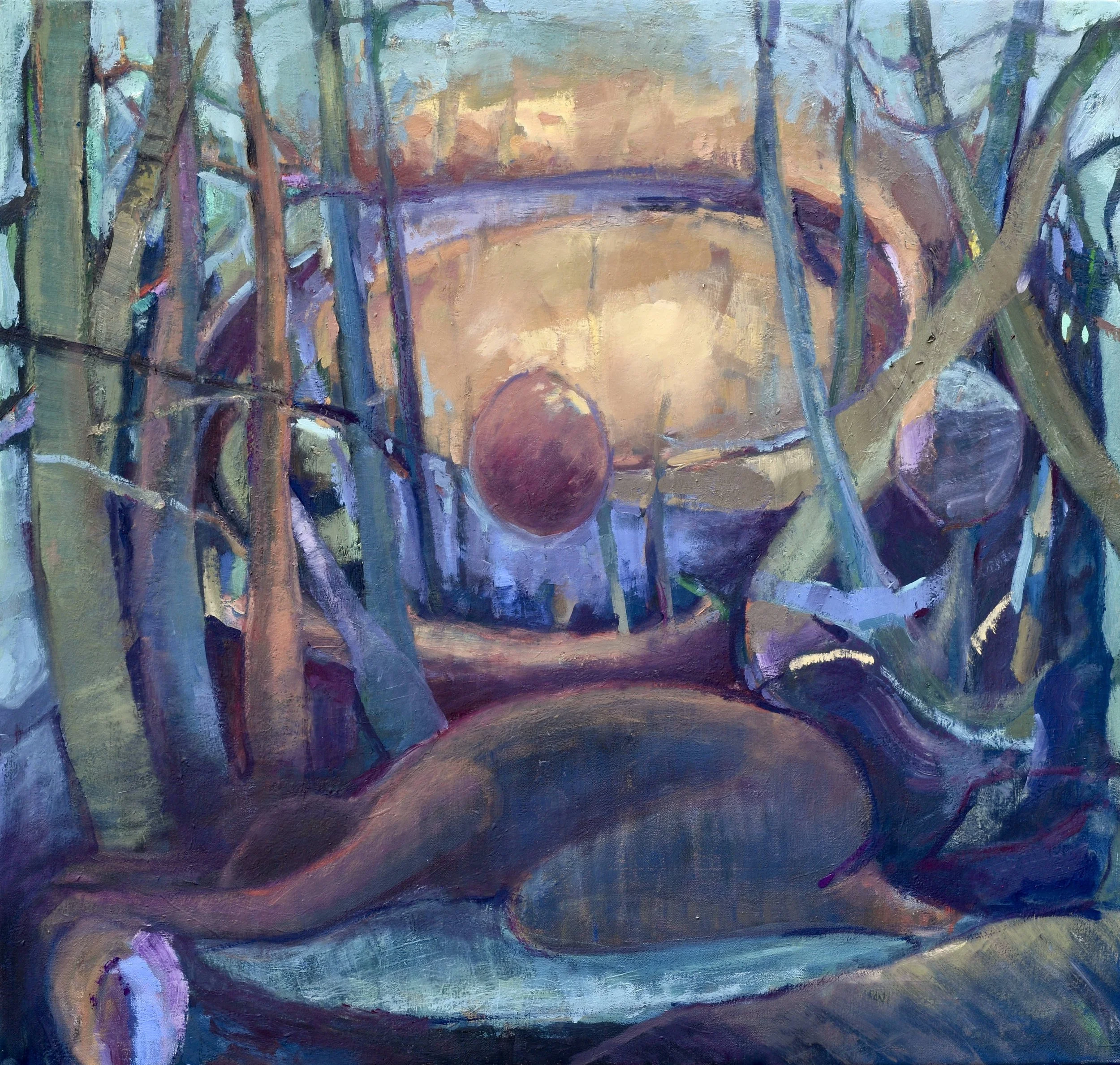
"When Bodies Become Gardens I" The body emerges as a shifting landscape, where human and vegetal forms blur. Growth becomes a condition of transformation, revealing the body as something porous, unfinished, and continually in relation to its surroundings.
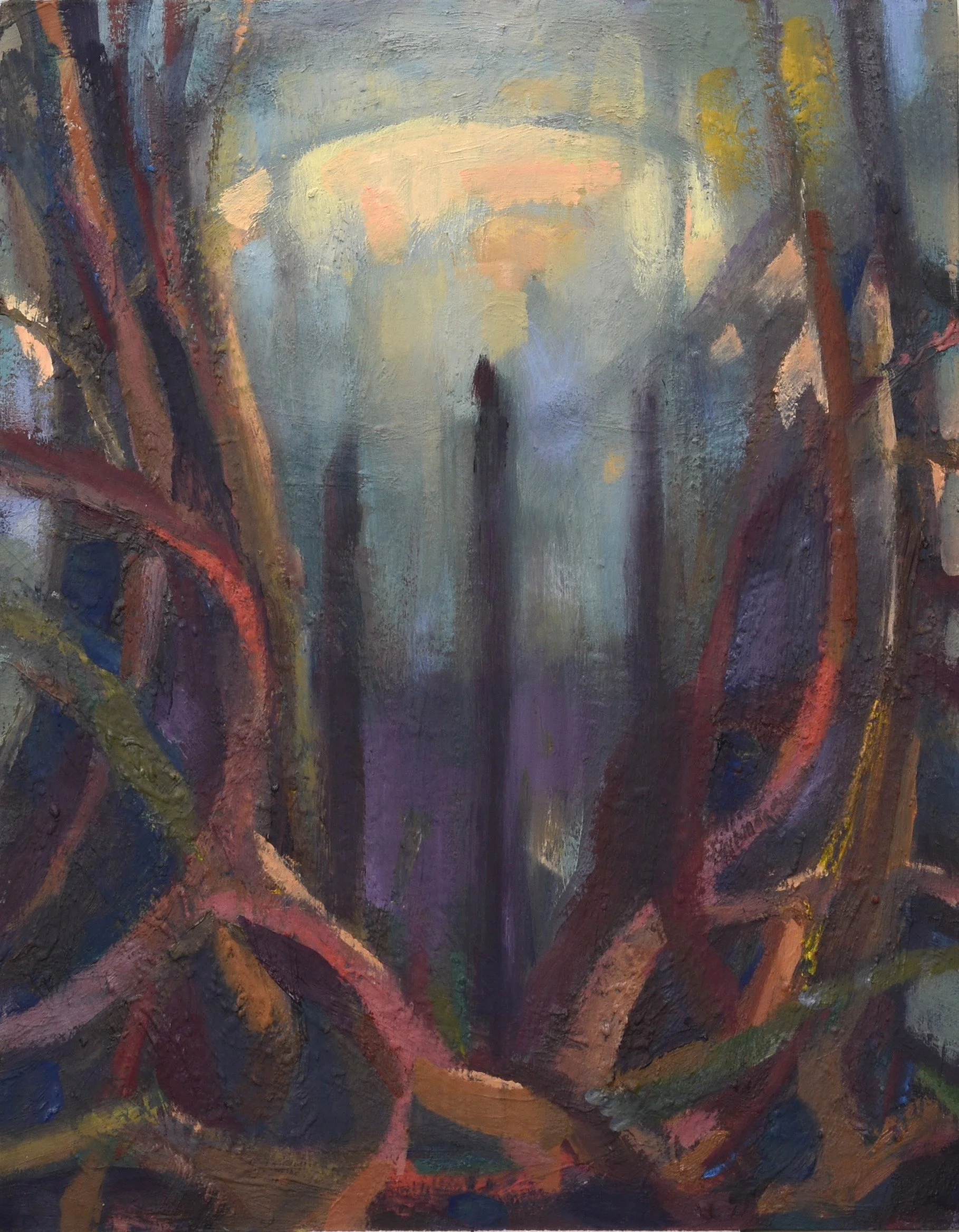
"When Bodies Become Biome III" The body is approached as an ecosystem rather than an isolated form. Human and more-than-human life intersect, unsettling the boundary between organism and environment.
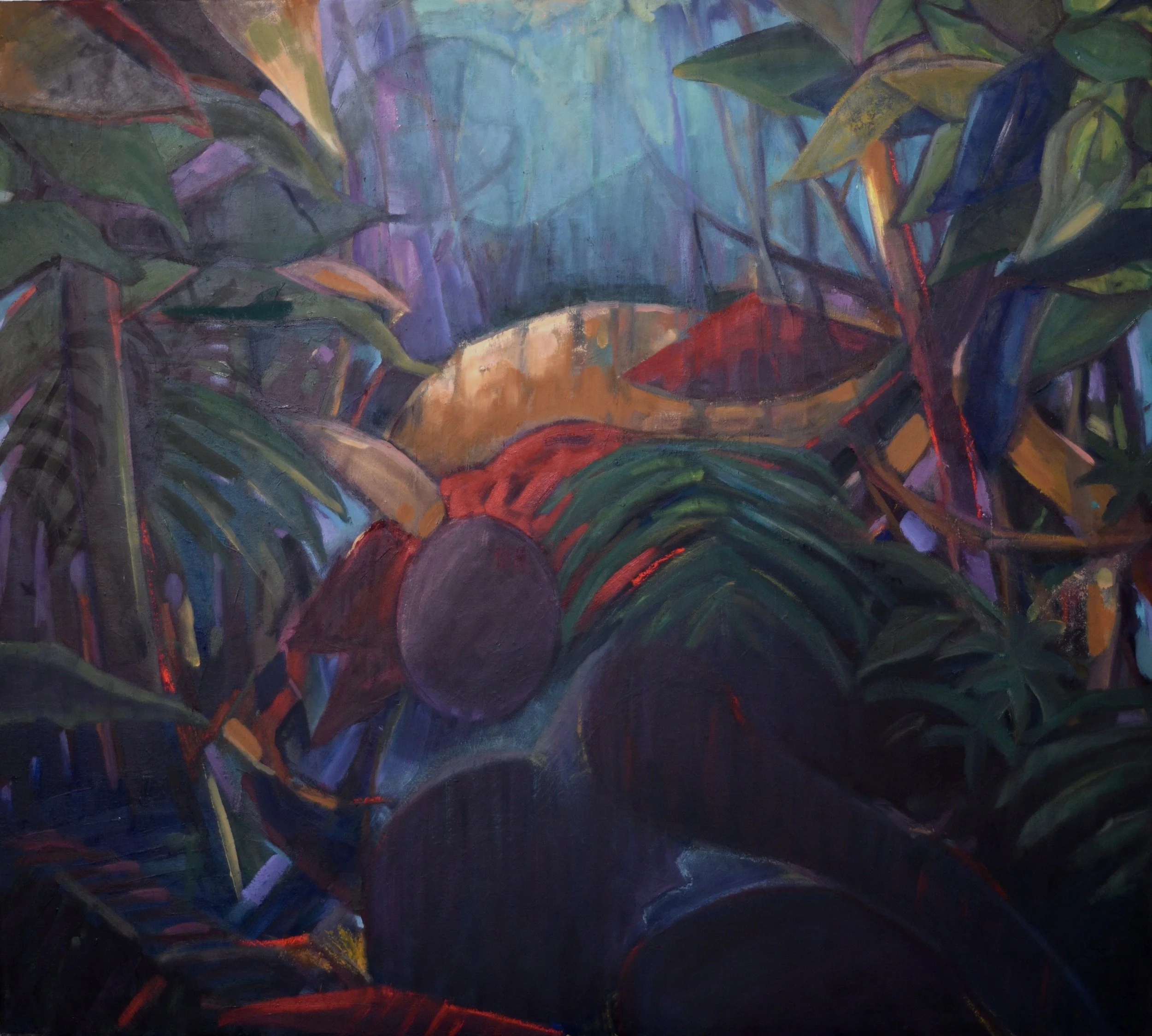
"When Bodies Become Gardens II" Overlapping leaves, branches, and organic shapes partially obscure the figure. The body appears to grow through its surroundings, resisting a fixed distinction between self and landscape.
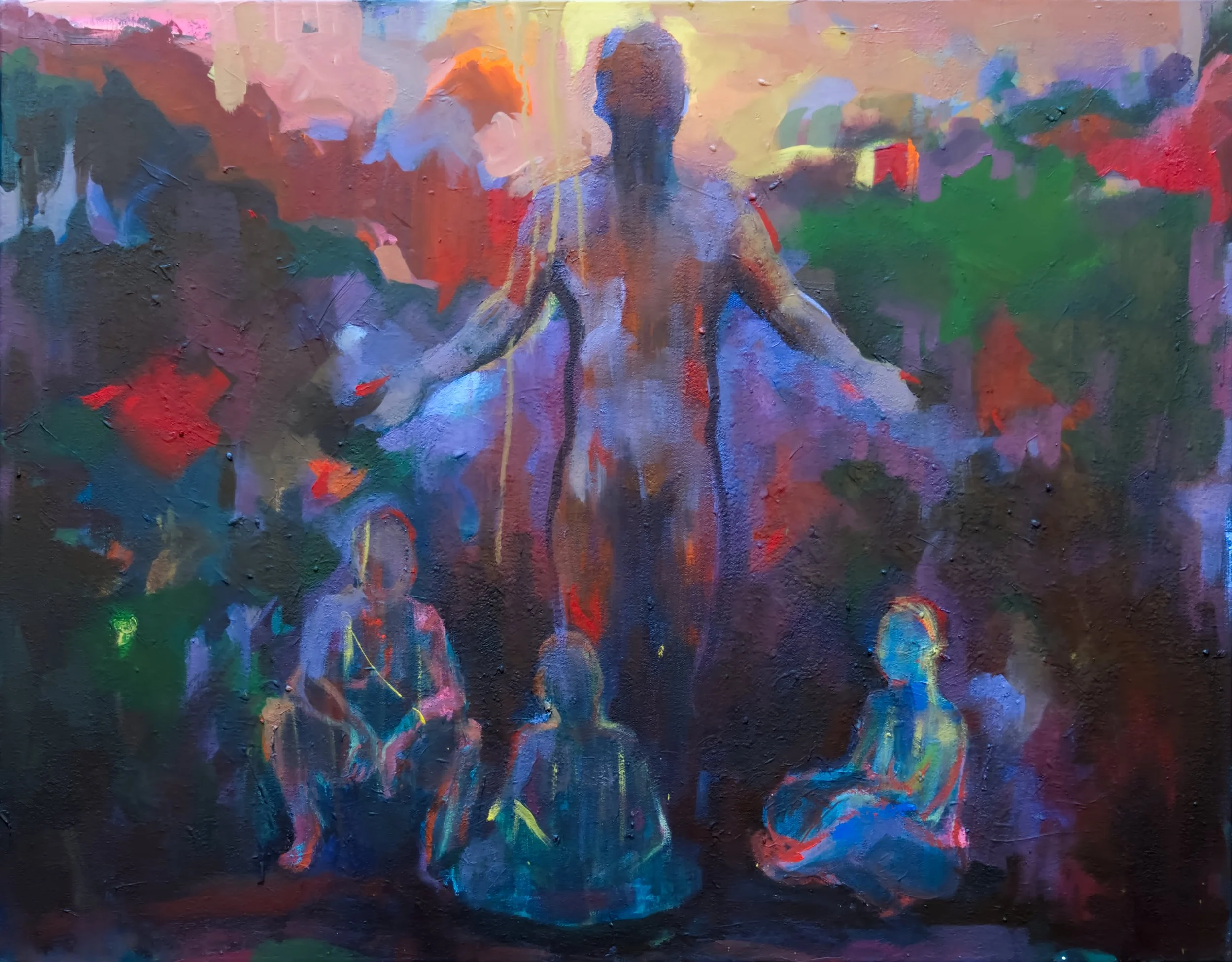
"When Bodies Become Shadow" Figures gather in a dark, forest-like space, emerging and dissolving into the surrounding atmosphere. Shadow becomes a threshold where bodies, memory, and uncertainty meet.
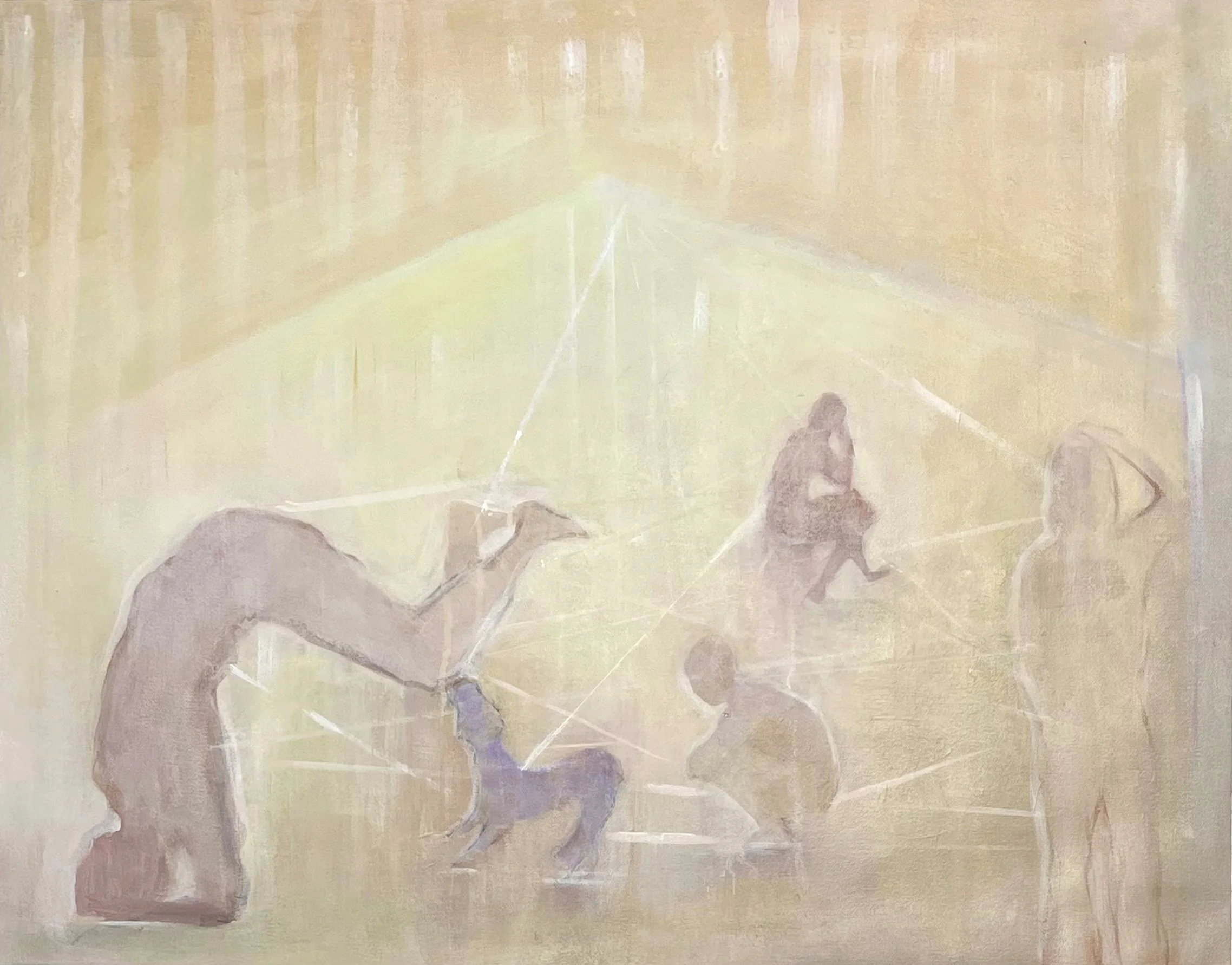
"When Bodies Become Entangled" Pale, fragmented figures move through an ambiguous domestic or architectural space. Their gestures suggest the complex negotiations of care and connection and the invisible structures that shape our relationships.
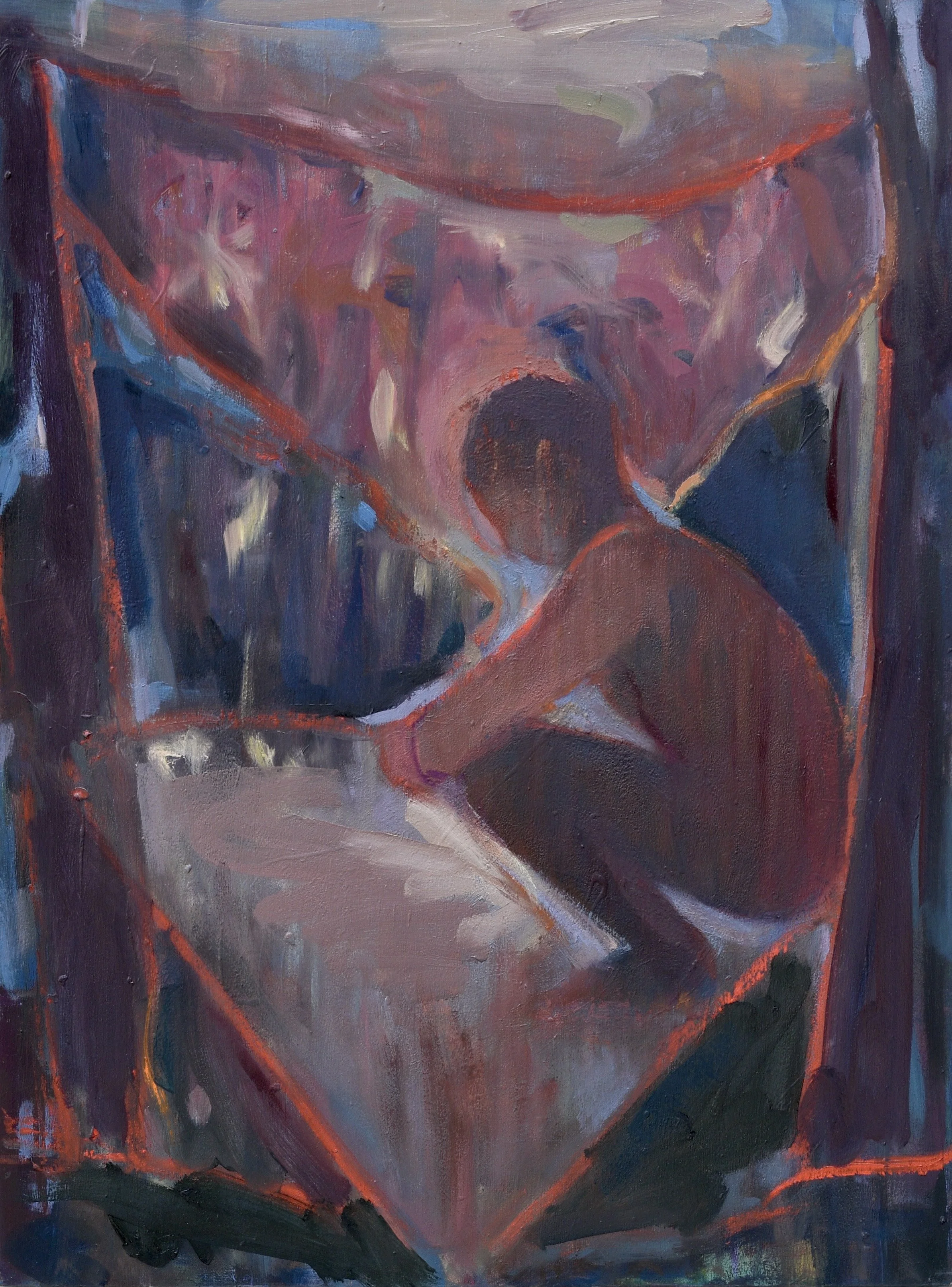
"When the Body Becomes Shelter" A seated figure folds inward within a loosely constructed interior. The body becomes both refuge and enclosure, holding the tension between the need for protection and the possibility of exposure.
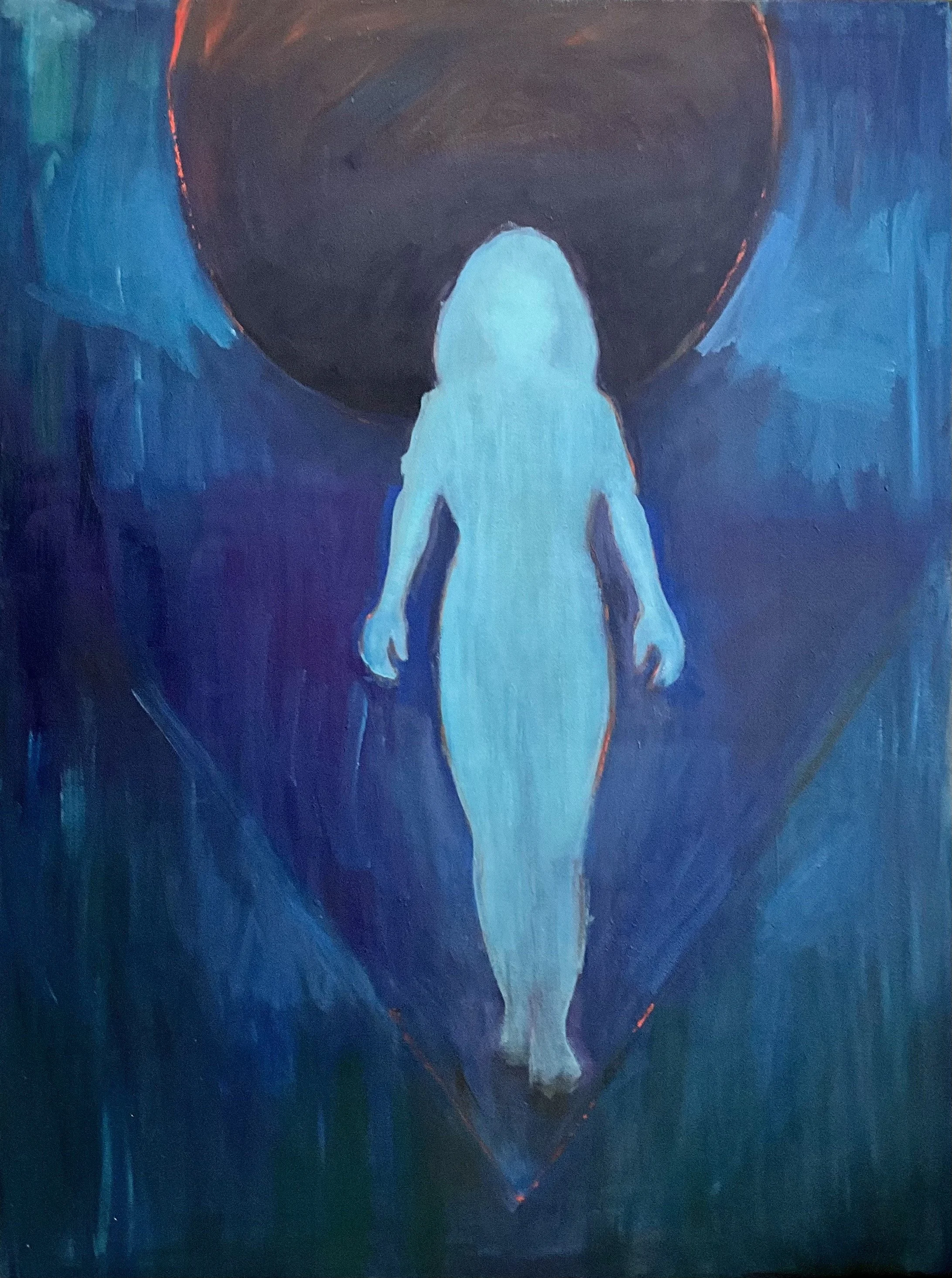
"When the Body Becomes Balance" A luminous figure stands within a deep blue field, suspended between darkness and light. Balance appears not as stillness, but as an ongoing negotiation with uncertainty.
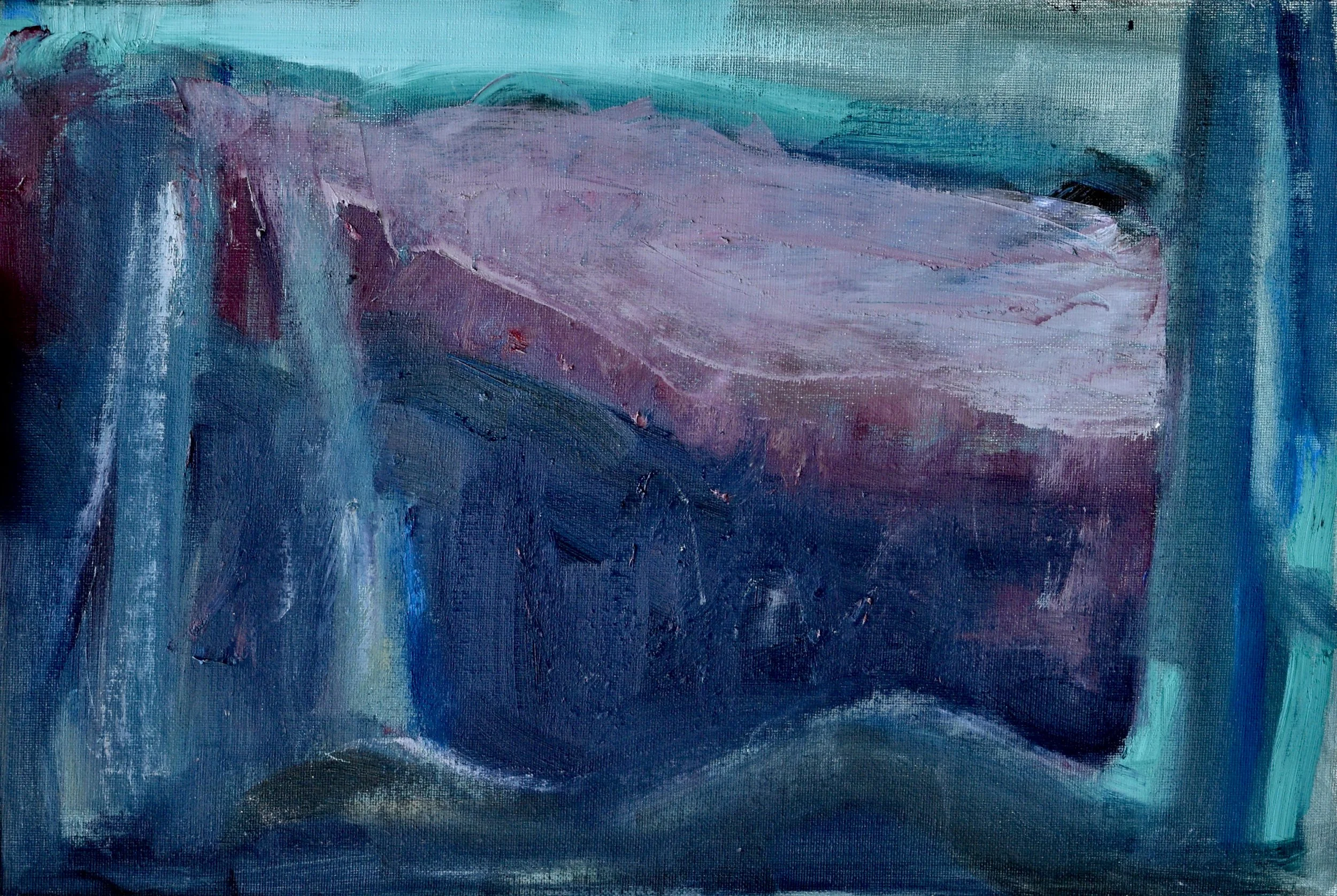
"Landscape as Shelter" A meditation on landscape as a source of protection, refuge, and belonging.
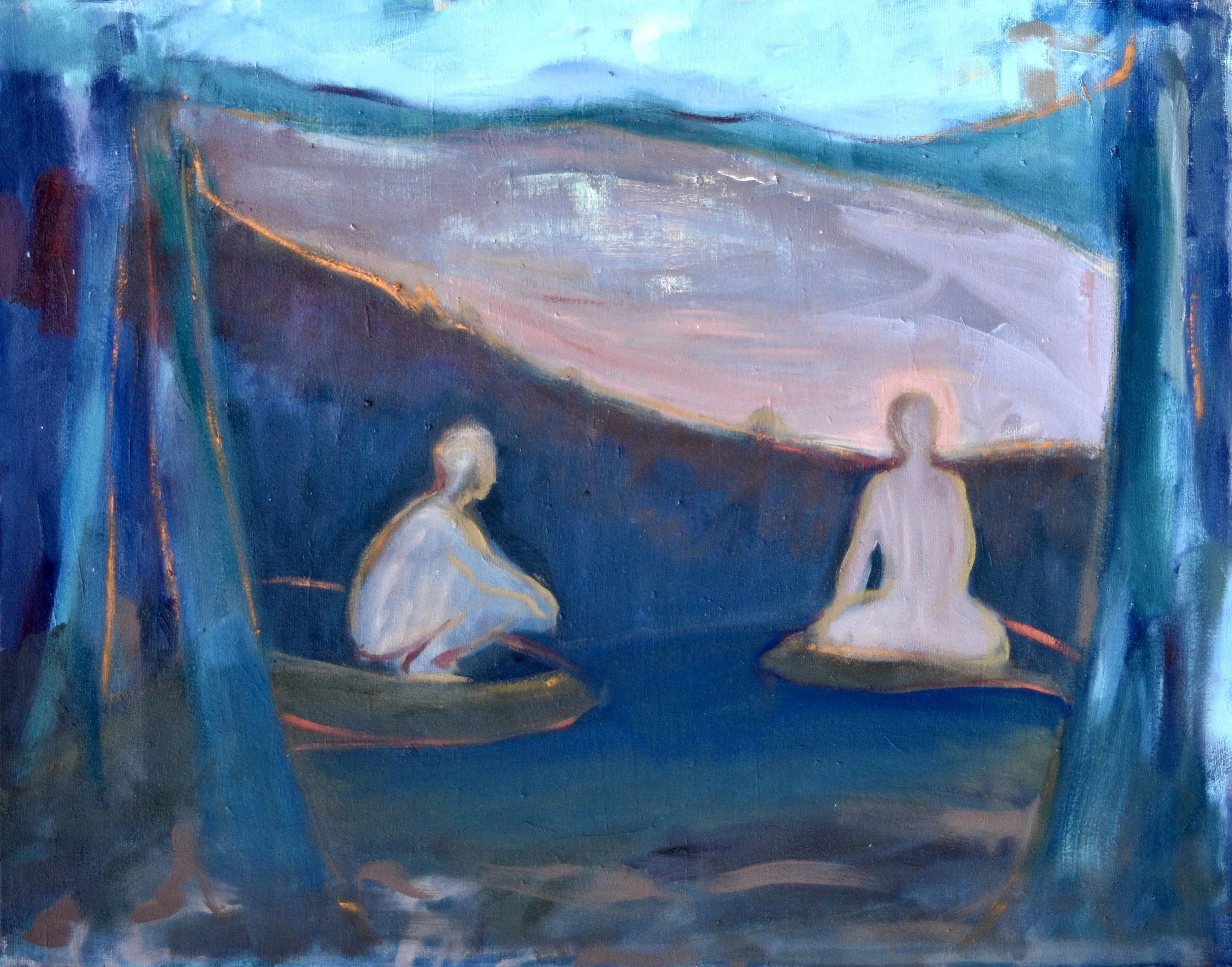
"When Bodies Becomes Space" Two seated figures inhabit an expansive, layered environment. Their presence creates space for stillness, contemplation, and the experience of being held within a larger field.
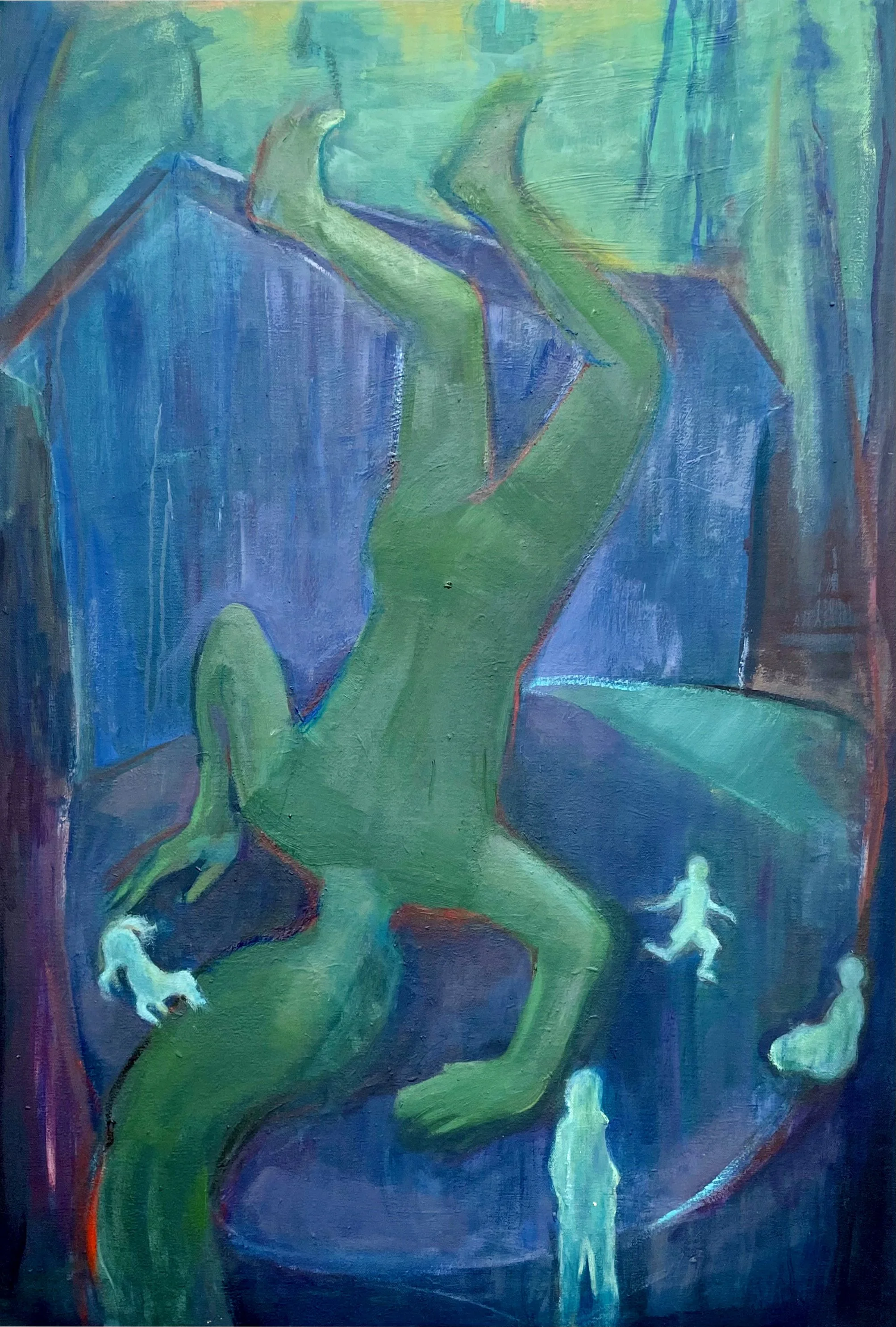
"When the Body Becomes Upside Down" An inverted green figure stretches across a blue landscape, surrounded by smaller human figures. The painting disrupts familiar orientations of body and space, suggesting a world experienced through movement, play, and transformation.
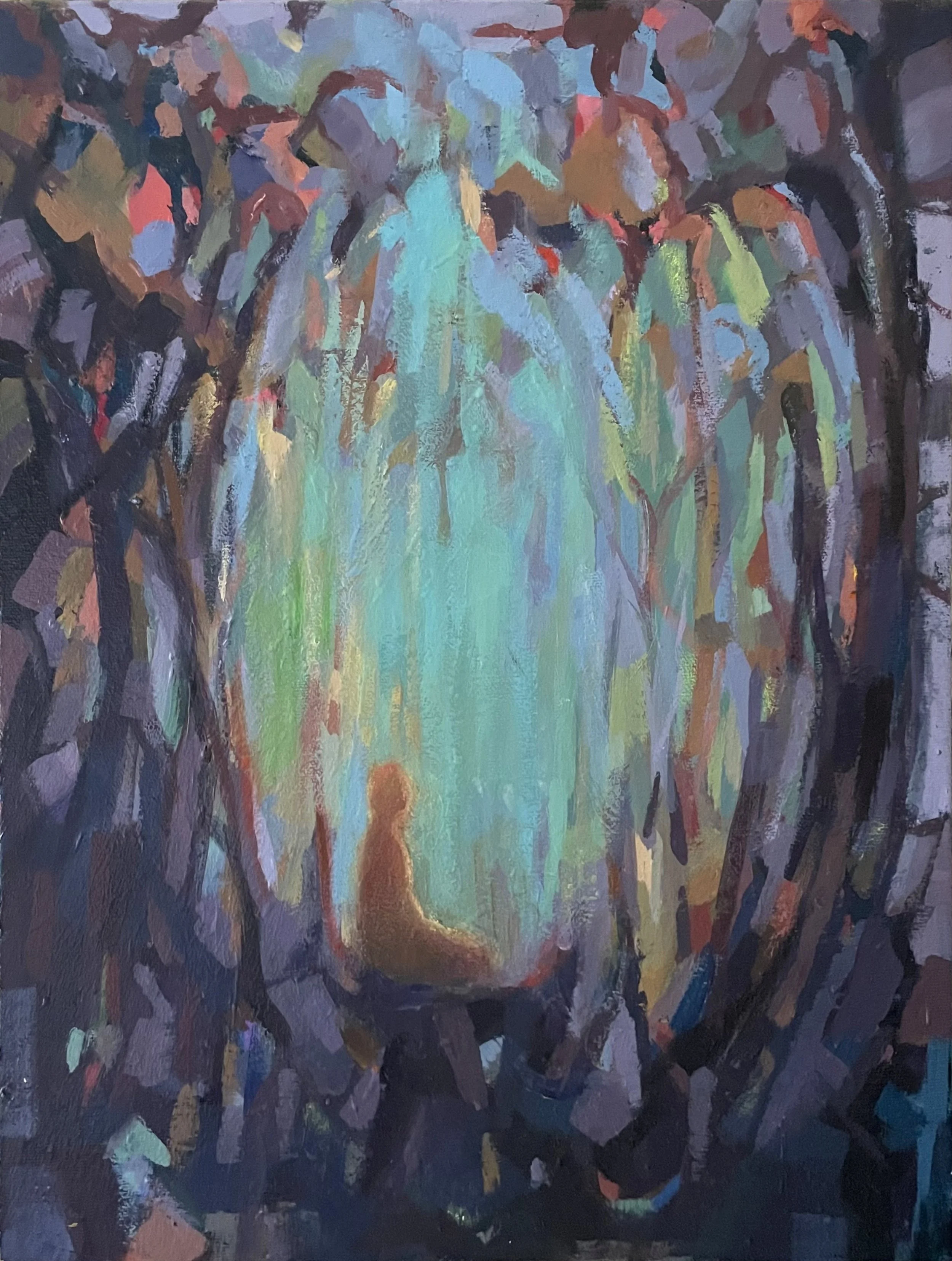
"When Landscape Becomes Shelter" A luminous central figure is surrounded by a dense gathering of bodies and vertical forms. The painting explores collective presence as a form of shelter and belonging.
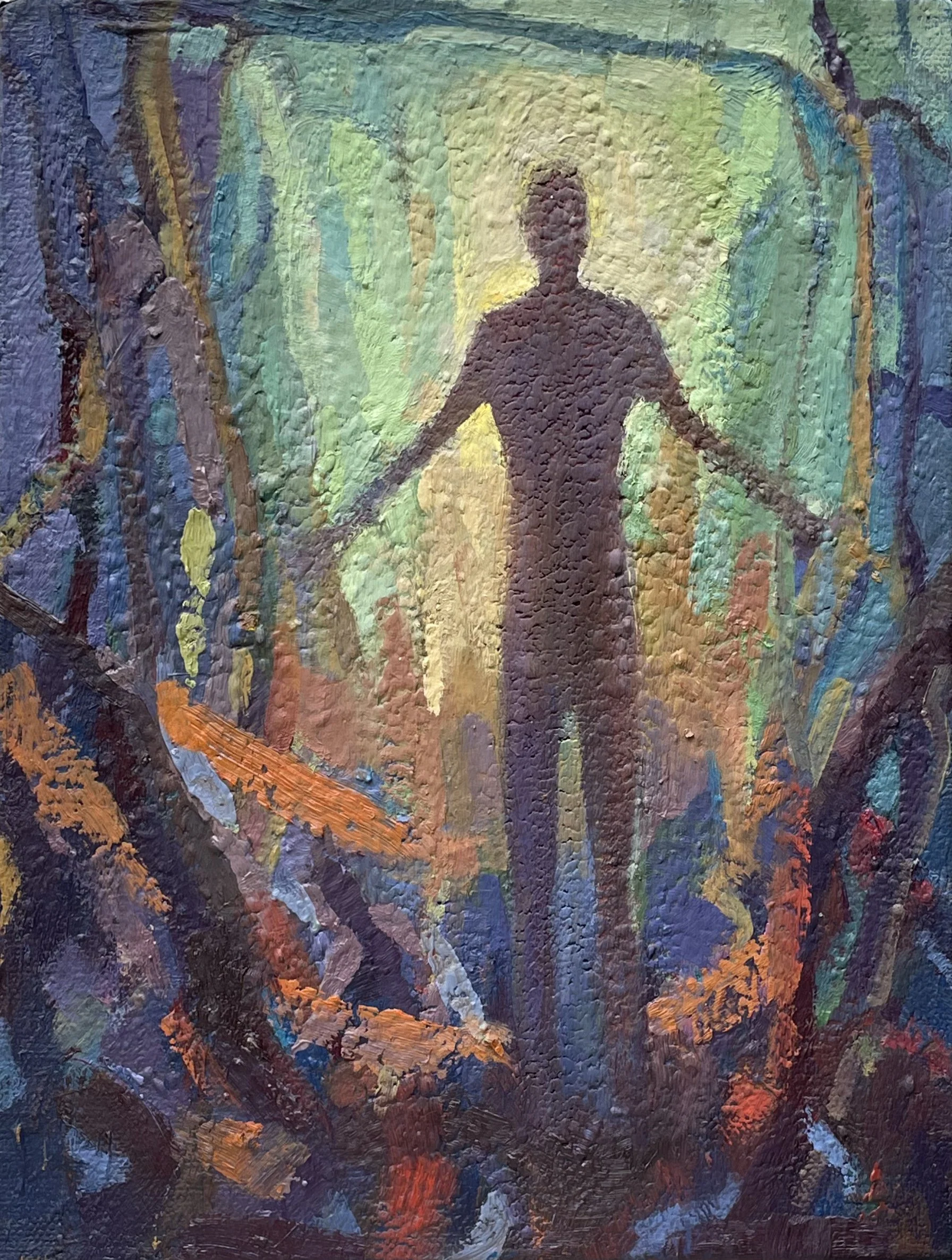
"When the Body becomes Biome II" A solitary figure stands within a dense, textured environment of trees and earth. The body becomes inseparable from the landscape, suggesting an ecology shaped by memory, sensation, and presence.
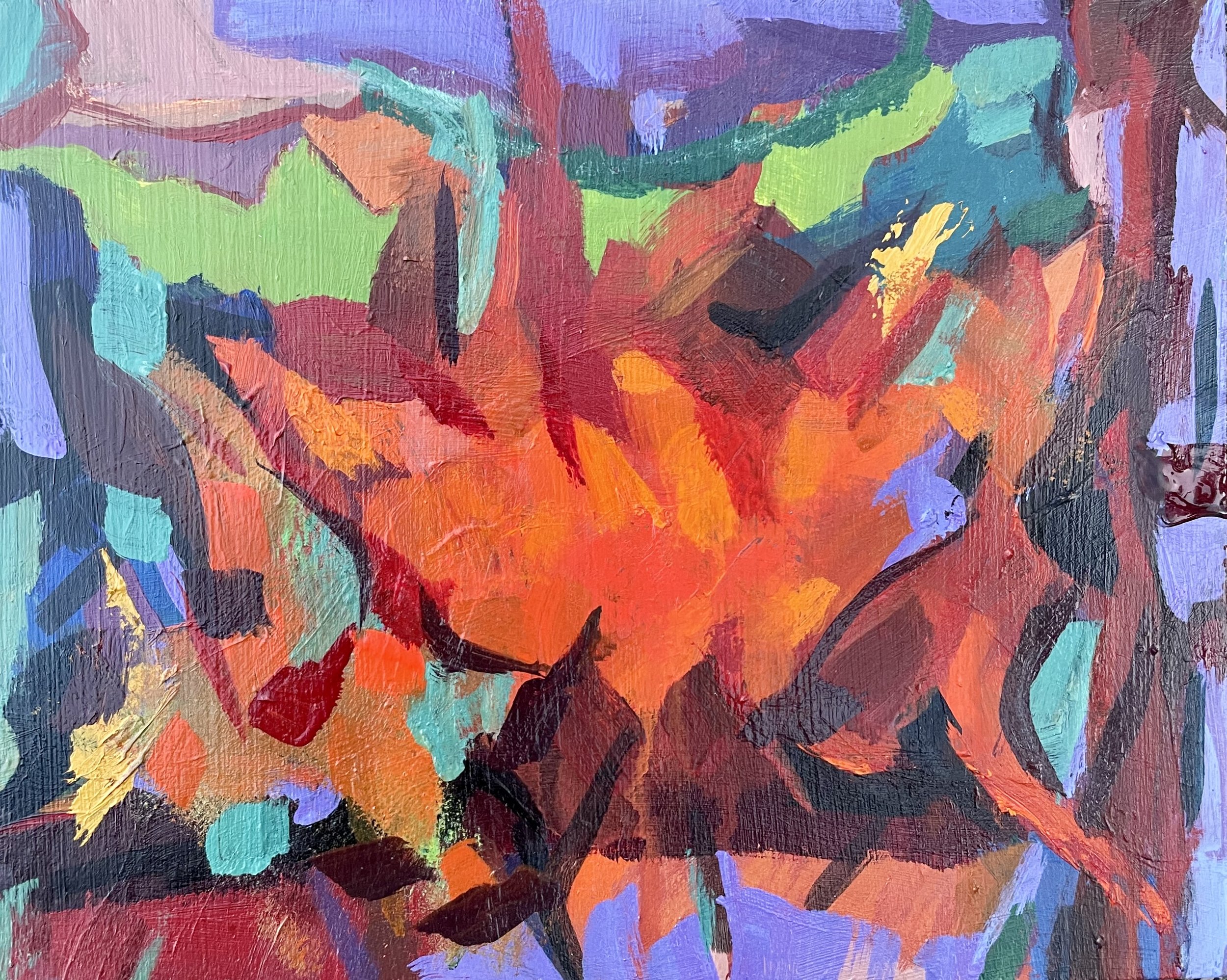
"When the Body becomes Resistance" Fragments of vivid orange, red, turquoise, and violet collide across the surface. The painting explores resistance as a disruptive force, in which the body is felt through movement, tension, and the refusal of fixed form.
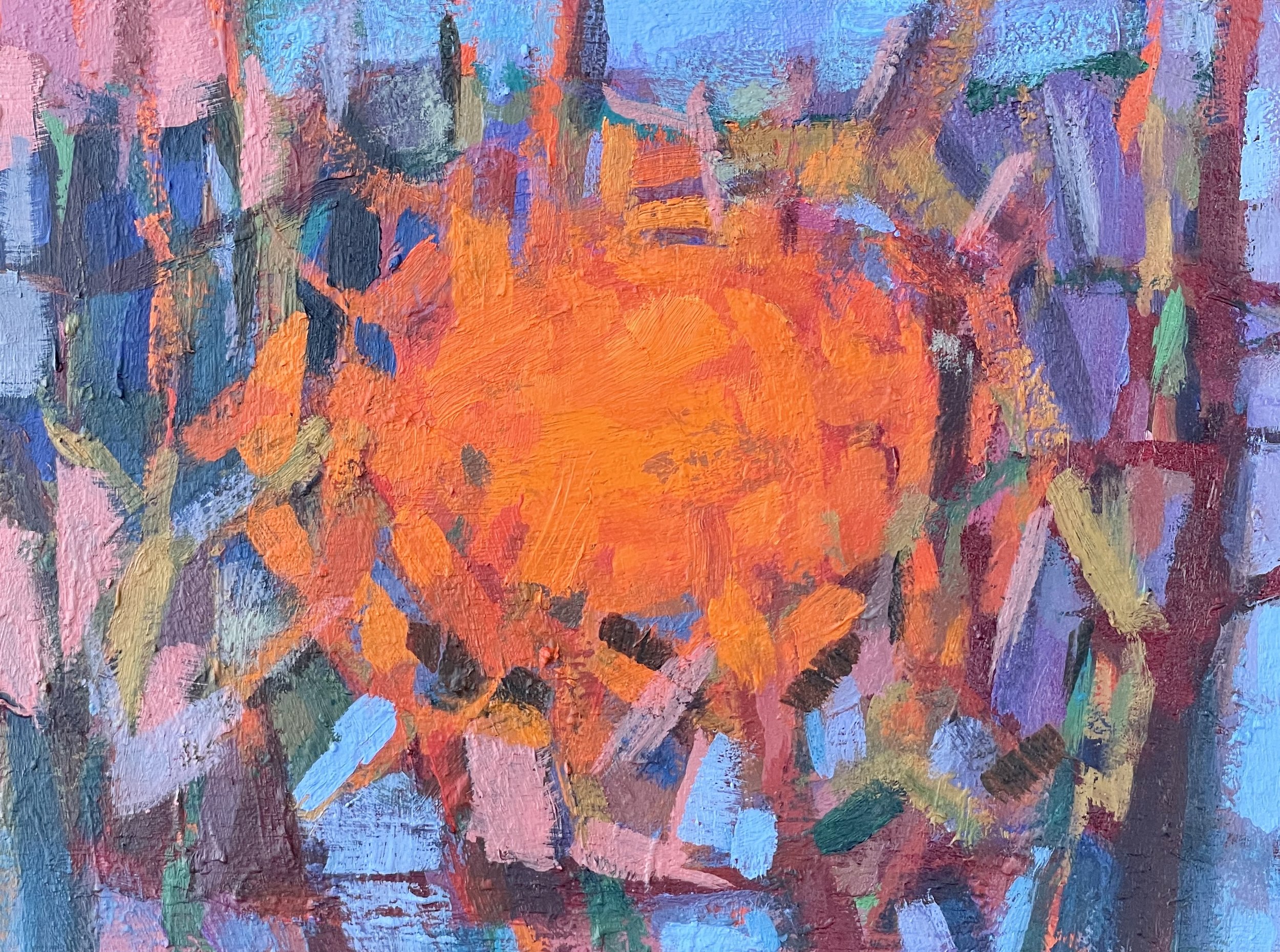
"When the Body becomes Nest" An intense orange, organic form emerges from a field of fragmented colour and gesture. The painting evokes the nest as a site of making and holding, where protection and growth remain in constant tension.
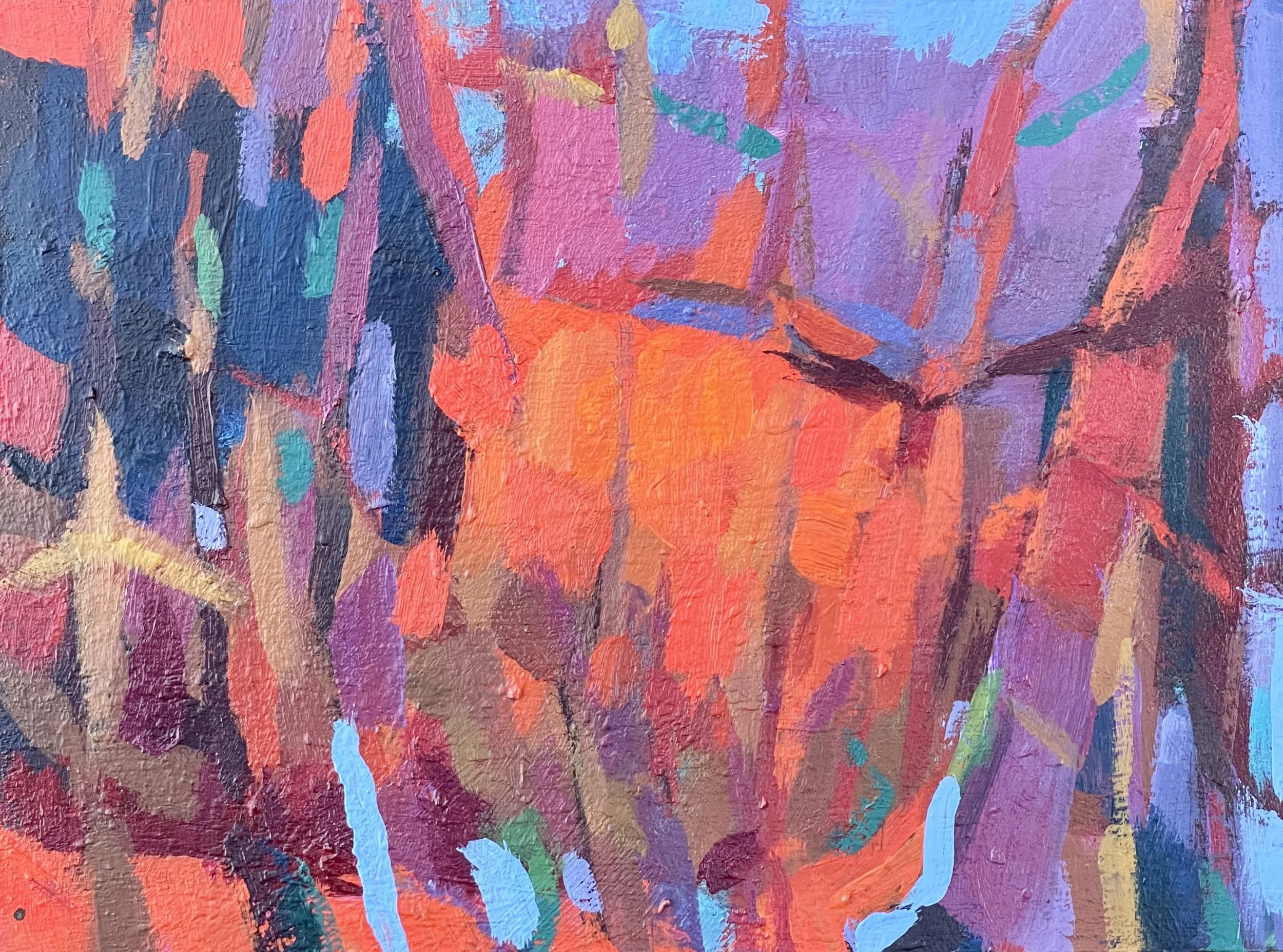
"When the Body becomes Growth" Vertical gestures and luminous orange forms gather across the canvas, suggesting bodies or vegetal structures emerging. Growth appears as an unstable, collective movement rather than a fixed destination.
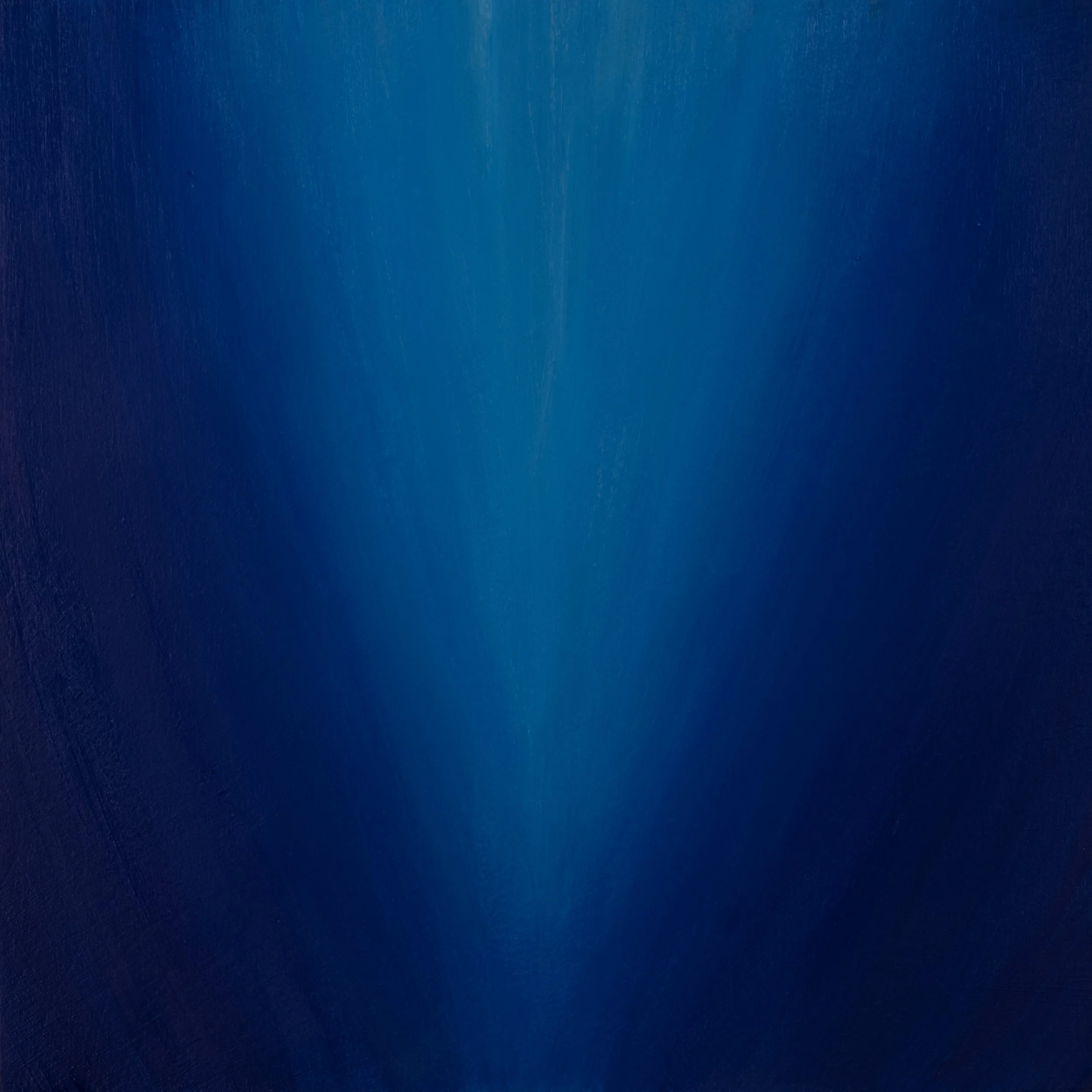
"When the Body becomes Light" A deep blue field opens around a subtle triangular illumination. The painting treats light as an embodied experience of presence, perception, and the possibility of transformation.
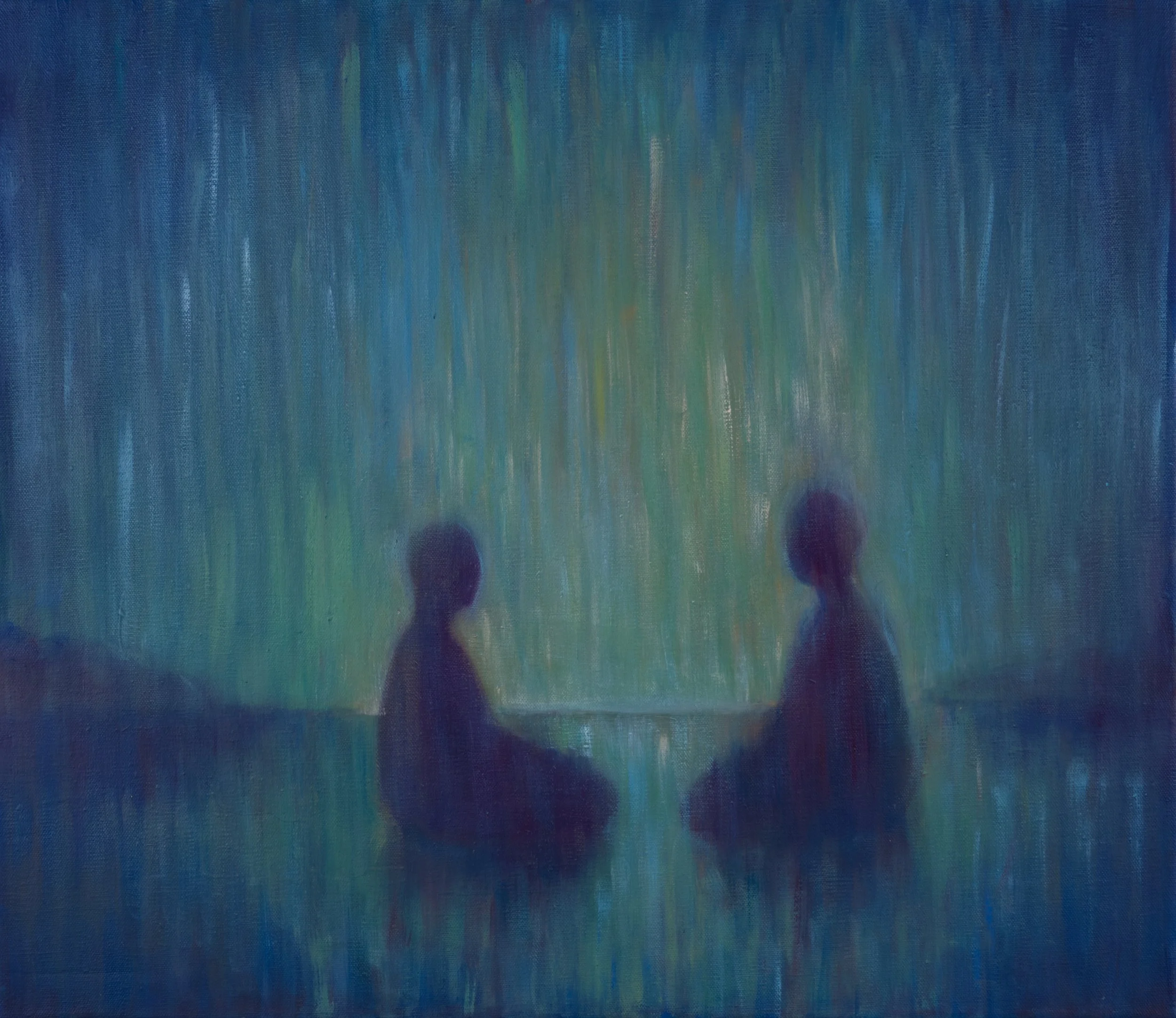
"When the Body becomes Space II" Two seated figures face each other in a blue, atmospheric setting. Their quiet encounter creates a space for attention, relation, and shared stillness.
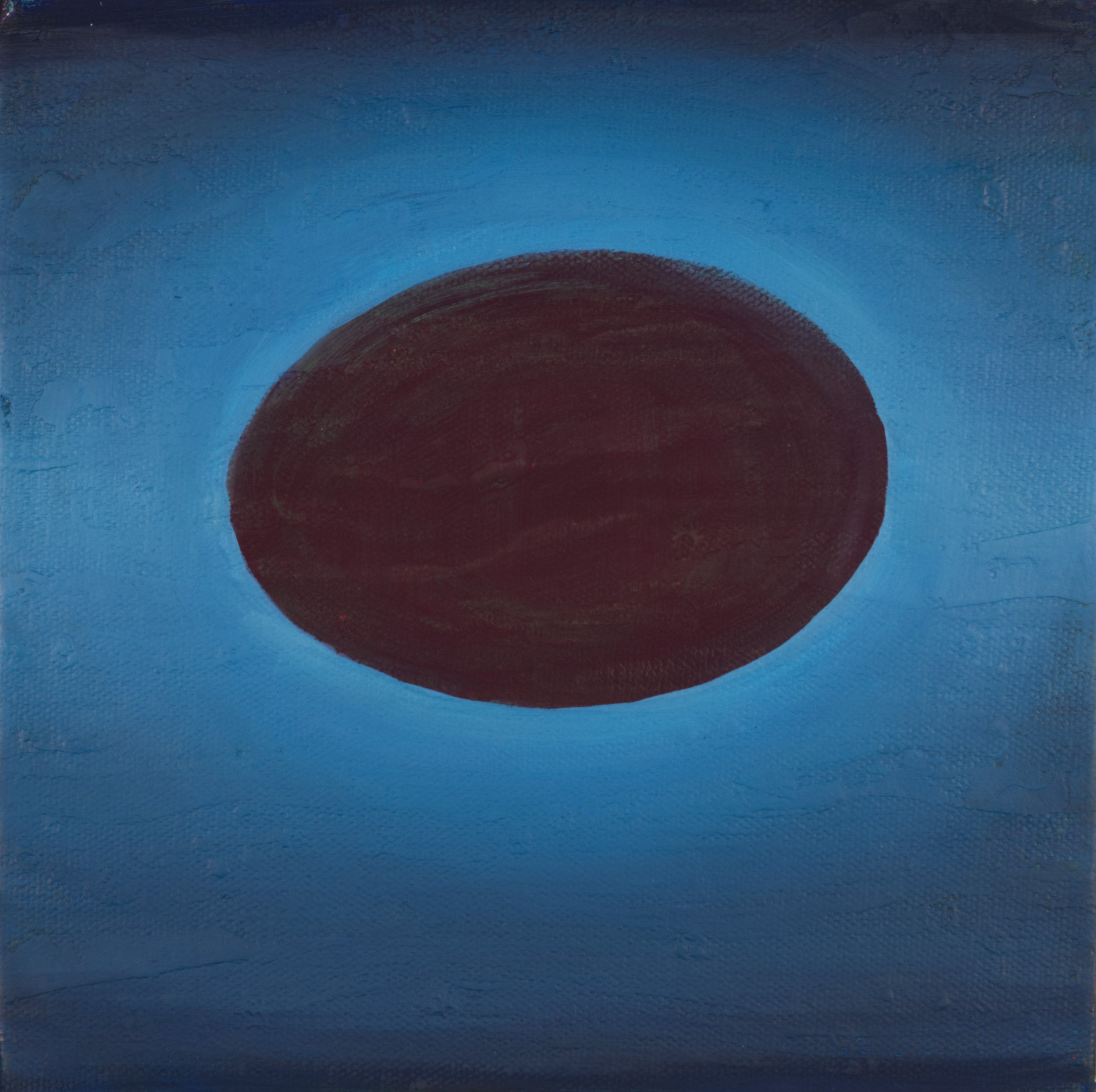
"When Body becomes Origin" An oval form floats within a deep blue field, hovering between egg, seed, and primordial body. The painting holds origin as a moment of suspended possibility, before form fully emerges.
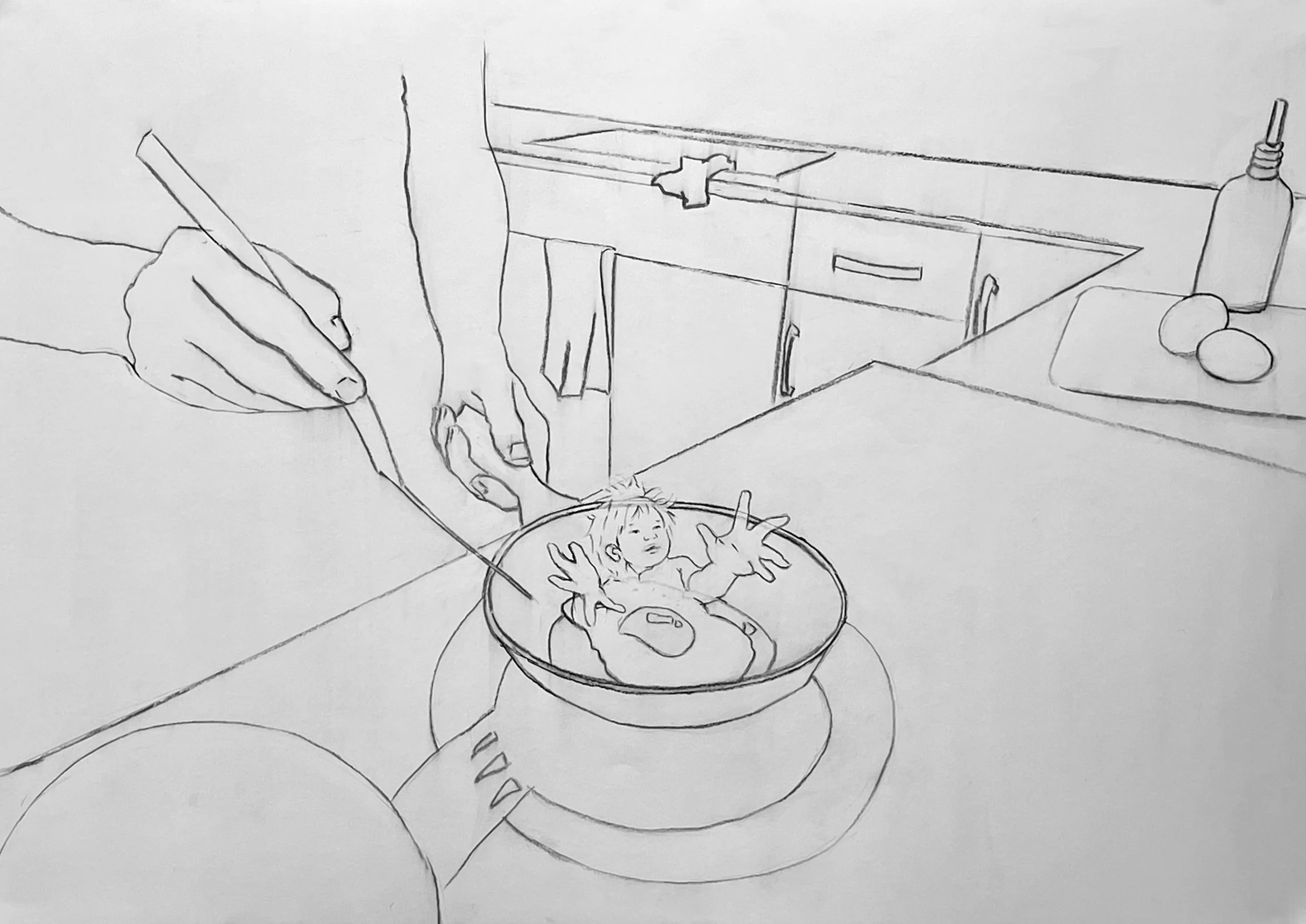
"Fried" A drawing from the Whose Dream? series that uses humour and the everyday to examine the body within domestic life. The work considers how ordinary routines can reveal the tensions between care, labour, and expectation.
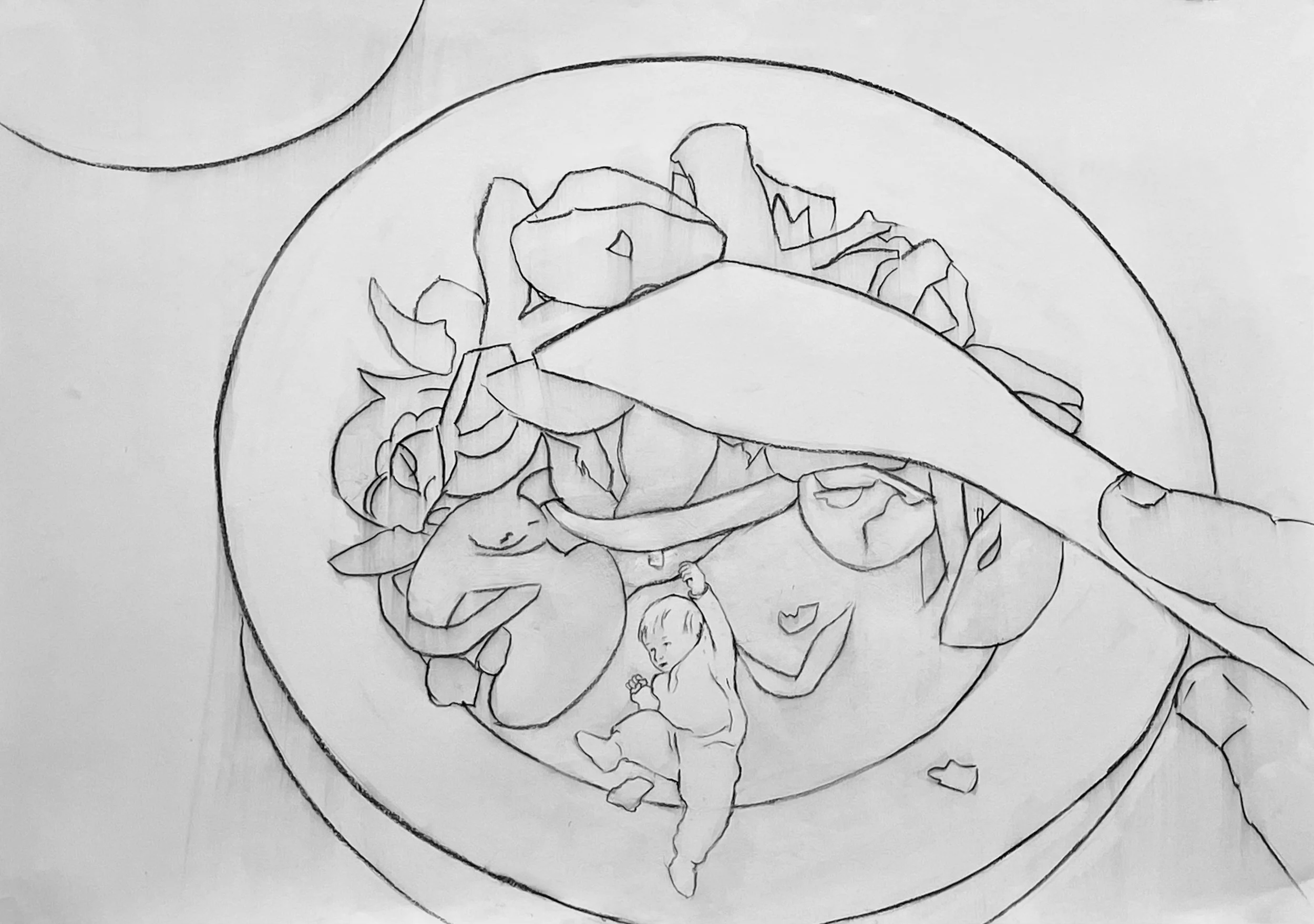
"Hang in there" A drawing from the Whose Dream? series that uses humour and the body to reflect on the effort of holding things together. It gestures toward the absurdity and resilience of everyday domestic life.
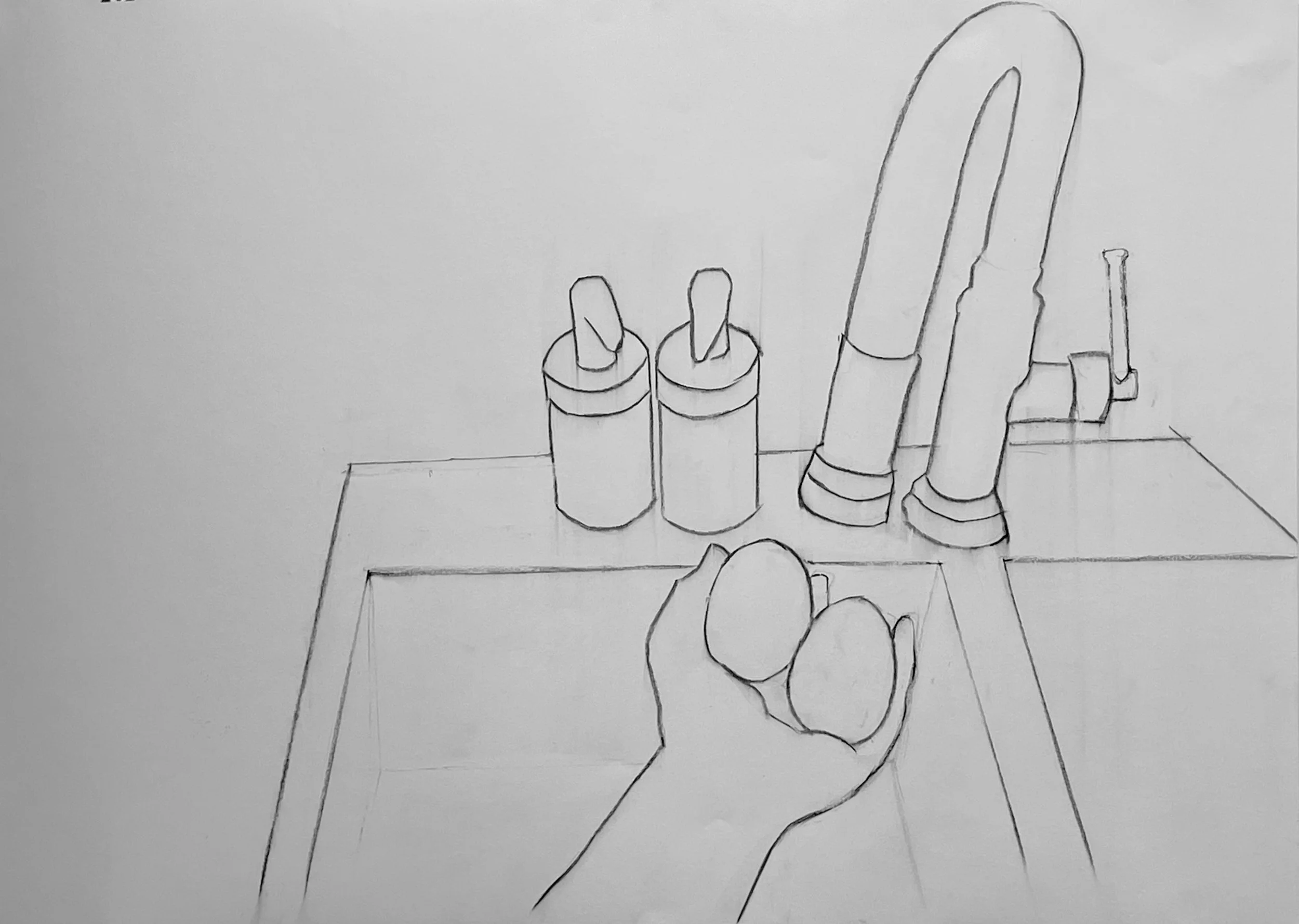
"By the Balls" A drawing that brings the body and domestic objects into an awkward, humorous encounter. The work uses bodily vulnerability and absurdity to question the expectations and power structures embedded in everyday life.
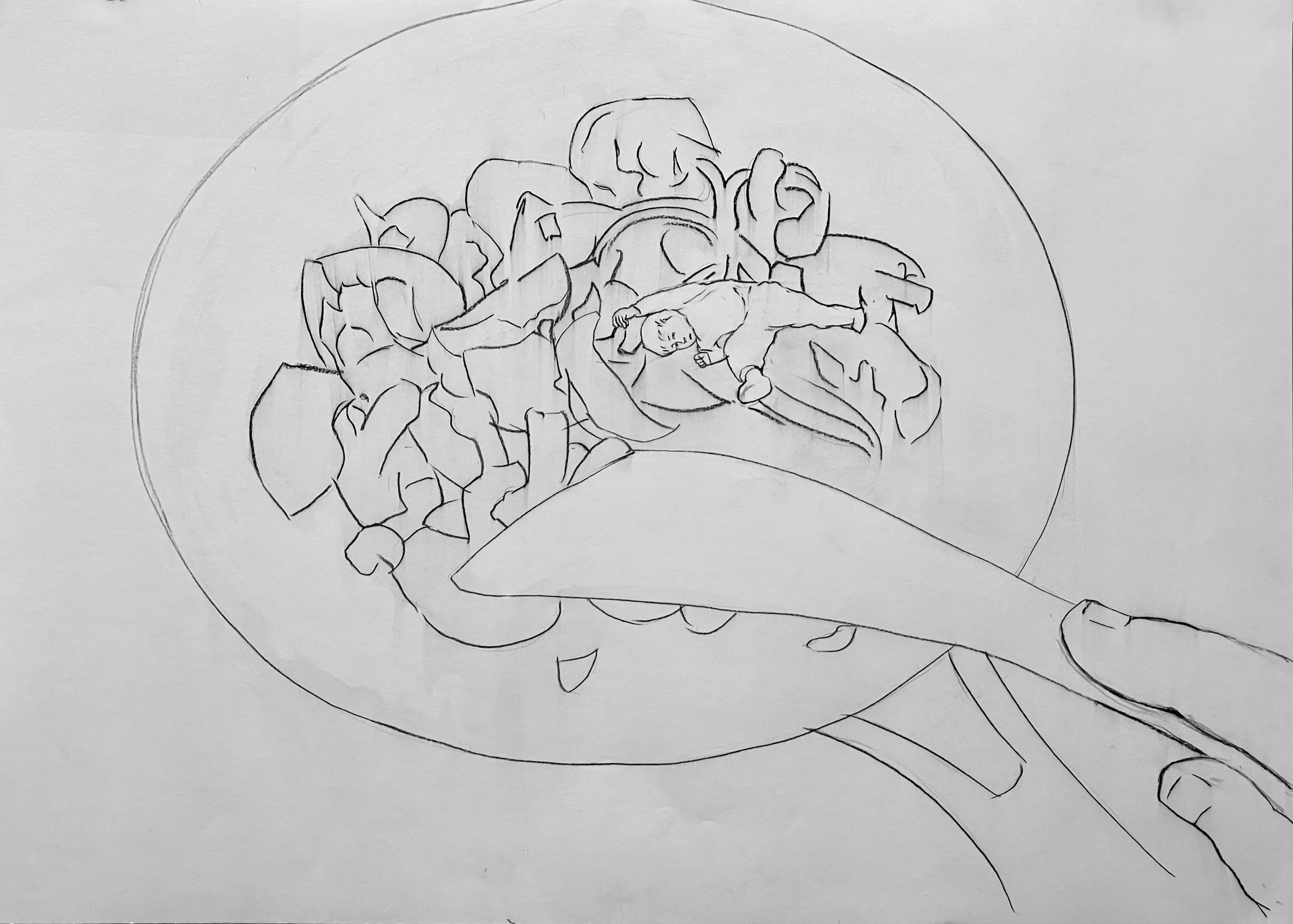
"What's for Dinner" A drawing that turns the familiar ritual of preparing a meal into a scene of bodily entanglement. The work examines domestic labour, care, and the often-unseen gestures that sustain everyday life.